
First-Party Data Marketing
The Future of Privacy-First Business Growth
First-Party Data Marketing is becoming one of the most important digital marketing strategies as businesses adapt to a privacy-focused digital world. With the decline of third-party cookies and increasing data privacy regulations, companies must rely on information collected directly from their customers to create personalized, trustworthy, and effective marketing campaigns.
Today’s consumers expect businesses to respect their privacy while delivering relevant experiences across websites, email, mobile apps, and social media. First-Party Data Marketing enables businesses to gather valuable customer insights through direct interactions, helping them improve marketing performance, strengthen customer relationships, and achieve sustainable business growth without depending on third-party data sources.
What is First-Party Data Marketing?
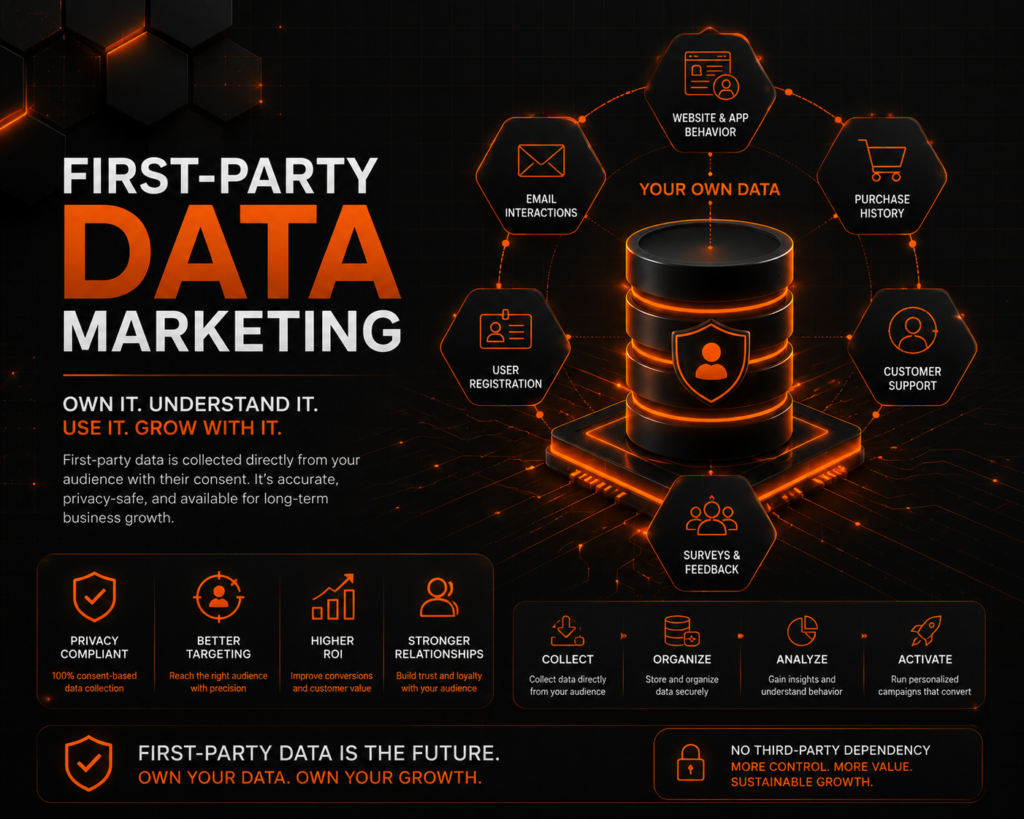
First-Party Data Marketing is the strategy of collecting, managing, and using customer information that businesses obtain directly from their own audience. This data comes from trusted sources such as website visits, contact forms, newsletter subscriptions, online purchases, customer feedback, loyalty programs, mobile applications, and CRM systems.
Unlike third-party data, which is collected by external providers, first-party data is accurate, reliable, and gathered with the customer’s consent. Because businesses own this information, they can create highly personalized marketing campaigns while maintaining transparency and complying with privacy regulations.
As digital privacy becomes increasingly important, First-Party Data Marketing has become the foundation of modern customer engagement.
Why First-Party Data Marketing Matters
Consumer privacy is changing the digital marketing landscape. Major browsers are limiting third-party cookies, while regulations such as GDPR and other privacy laws encourage businesses to collect customer information responsibly.
Businesses using First-Party Data Marketing gain a competitive advantage by building stronger customer relationships based on trust and transparency.
Key reasons why it matters include:
- Increasing digital privacy regulations
- Declining use of third-party cookies
- More accurate customer insights
- Better audience targeting
- Higher customer trust
- Improved marketing performance
- Long-term business sustainability
Sources of First-Party Data
Businesses can collect valuable customer information through various owned digital channels.
Common sources include:
- Website contact forms
- Newsletter subscriptions
- Customer account registrations
- Online purchases
- Mobile applications
- CRM systems
- Customer surveys
- Live chat interactions
- Loyalty and rewards programs
- Website analytics
- Event registrations
- Downloadable resources and lead magnets
Collecting data through these channels helps businesses better understand customer behavior and preferences.
Benefits of First-Party Data Marketing
Implementing First-Party Data Marketing offers several long-term advantages for businesses.
Benefits include:
- Better customer personalization
- Higher conversion rates
- Improved email marketing performance
- More accurate audience segmentation
- Increased customer loyalty
- Stronger brand trust
- Better return on marketing investment (ROI)
- Compliance with privacy regulations
- Reduced dependence on third-party cookies
- Sustainable long-term marketing strategy
By using trusted customer data responsibly, businesses can deliver more meaningful experiences while improving marketing results.
How to Implement First-Party Data Marketing
Businesses should begin by creating opportunities for customers to voluntarily share their information. Offer valuable resources such as eBooks, newsletters, webinars, discount offers, or exclusive content in exchange for customer details.
Use CRM software to organize customer data and segment audiences based on interests, purchase history, and engagement. Personalize email campaigns, website experiences, and product recommendations using customer preferences while always obtaining proper consent.
Businesses should also maintain secure data storage, regularly update customer records, and clearly communicate how customer information will be used. Transparency builds trust and encourages stronger long-term relationships.
Common Mistakes to Avoid
Many businesses fail to maximize the value of first-party data because they overlook important best practices.
Common mistakes include:
- Collecting unnecessary customer information
- Ignoring customer consent
- Poor data management
- Sending irrelevant marketing messages
- Failing to update customer records
- Weak data security practices
- Not personalizing customer experiences
- Overlooking privacy regulations
Avoiding these mistakes helps businesses maintain customer trust while improving marketing effectiveness.
The Future of First-Party Data Marketing
As privacy regulations continue to evolve and third-party cookies become less important, First-Party Data Marketing will play an even greater role in digital marketing. Businesses that invest in ethical data collection, transparent communication, and personalized customer experiences will be better positioned for long-term success.
Rather than relying on external data providers, organizations will increasingly build stronger relationships by understanding their own customers through direct interactions and meaningful engagement.
I'm Concluding This,
First-Party Data Marketing is shaping the future of digital marketing by helping businesses collect accurate customer insights while respecting privacy and building trust. By using data gathered directly from customers, businesses can create personalized marketing campaigns, improve customer experiences, and achieve better marketing performance.
As the digital landscape continues to evolve, adopting a First-Party Data Marketing strategy will help businesses remain compliant, strengthen customer relationships, and drive sustainable business growth in 2026 and beyond.