
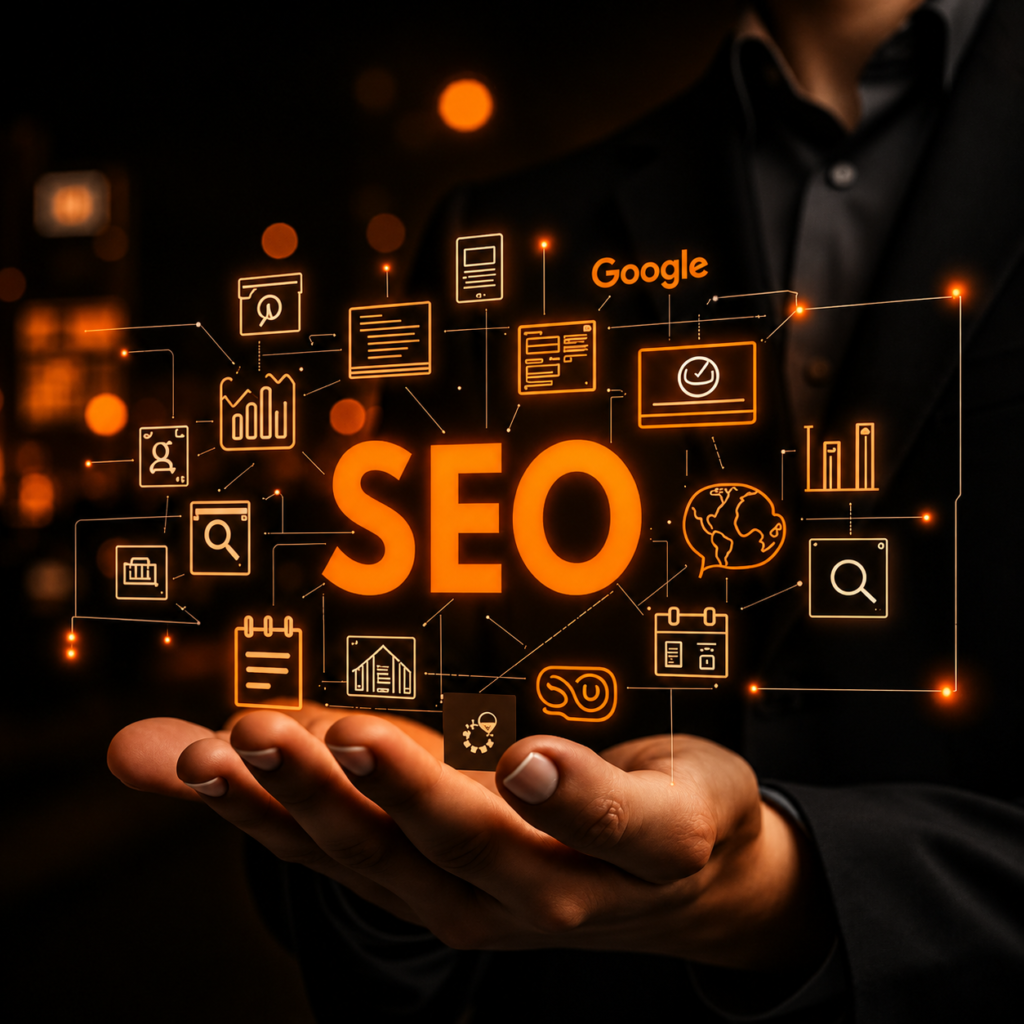
Search Engine Optimization
The Complete Guide for Businesses in 2026
SEO (Search Engine Optimization) is one of the most effective digital marketing strategies for increasing a website’s visibility in search engine results. As millions of people use Google and other search engines every day to find products, services, and information, businesses that invest in SEO have a better chance of reaching their target audience, generating qualified leads, and achieving long-term growth.
Unlike paid advertising, SEO focuses on earning organic traffic by optimizing your website’s content, structure, and technical performance. A well-executed SEO strategy helps search engines understand your website while providing users with valuable and relevant information. In 2026, SEO continues to evolve alongside artificial intelligence, user experience, and search intent, making it an essential part of every successful digital marketing strategy.
Businesses that invest in SEO (Search Engine Optimization) can improve their online visibility, attract qualified visitors, and build long-term digital success through consistent organic growth.
What is SEO (Search Engine Optimization)?
SEO (Search Engine Optimization) is the process of optimizing a website to improve its visibility on search engines such as Google and Bing. The primary goal of SEO is to rank higher for relevant search queries, making it easier for potential customers to discover your business.
SEO involves improving website content, optimizing keywords, enhancing technical performance, building quality backlinks, and creating an excellent user experience. Search engines evaluate these factors to determine which websites provide the most valuable and trustworthy information for users.
By implementing SEO best practices, businesses can attract consistent organic traffic without relying solely on paid advertisements.
Why SEO Matters
Search engines remain one of the primary ways people discover businesses online. Ranking on the first page of Google significantly increases the chances of attracting visitors and converting them into customers.
SEO (Search Engine Optimization) helps businesses:
- Increase organic website traffic
- Improve online visibility
- Generate qualified leads
- Build brand authority and trust
- Enhance user experience
- Achieve long-term marketing results
- Reduce dependence on paid advertising
- Increase conversion opportunities
An effective SEO strategy delivers sustainable growth and long-term value for businesses of all sizes.
Core Components of SEO
A successful SEO strategy consists of several key elements that work together to improve search engine rankings.
On-Page SEO
Optimize website content, titles, headings, meta descriptions, images, and internal links using relevant keywords and valuable information.
Technical SEO
Improve website speed, mobile responsiveness, site architecture, crawlability, indexing, XML sitemaps, HTTPS security, and Core Web Vitals to ensure search engines can easily access and understand your website.
Off-Page SEO
Build high-quality backlinks from authoritative websites, strengthen your online reputation, and increase your website’s credibility through ethical link-building strategies.
Local SEO
Optimize your Google Business Profile, collect customer reviews, use location-based keywords, and maintain consistent business information to attract local customers.
Content SEO
Create original, informative, and user-focused content that answers customer questions, targets search intent, and demonstrates expertise.
Benefits of SEO
SEO (Search Engine Optimization) helps businesses reduce marketing costs over time by generating sustainable organic traffic instead of relying entirely on paid advertising.
Benefits include:
- Higher search engine rankings
- Increased organic traffic
- Better user experience
- Greater brand awareness
- Improved website credibility
- Higher conversion rates
- Better return on investment (ROI)
- Long-term online visibility
- Competitive advantage
- Sustainable business growth
SEO continues to deliver value long after content is published, making it one of the most cost-effective digital marketing strategies.
Common SEO Mistakes to Avoid
Many businesses struggle to achieve strong rankings because they overlook SEO best practices.
Common mistakes include:
- Keyword stuffing
- Publishing thin or duplicate content
- Ignoring search intent
- Slow website loading speed
- Poor mobile optimization
- Broken links and technical issues
- Neglecting internal linking
- Buying low-quality backlinks
- Not updating outdated content
- Ignoring analytics and performance tracking
Avoiding these mistakes improves both user experience and search engine rankings.
The Future of SEO
Search engines are becoming smarter through artificial intelligence and machine learning. Modern SEO focuses less on keyword repetition and more on content quality, expertise, user intent, and overall website experience. Businesses that create valuable, trustworthy, and user-focused content while integrating SEO with AEO and GEO strategies will be better positioned to succeed in the future of search.
I'm Concluding This,
SEO (Search Engine Optimization) remains the foundation of successful digital marketing. By optimizing your website, publishing valuable content, improving technical performance, and understanding user intent, businesses can increase online visibility, attract qualified traffic, and achieve long-term growth.
As search technology continues to evolve, combining traditional SEO with AI-focused strategies like AEO and GEO will help businesses stay ahead of the competition and build a strong digital presence in 2026 and beyond.